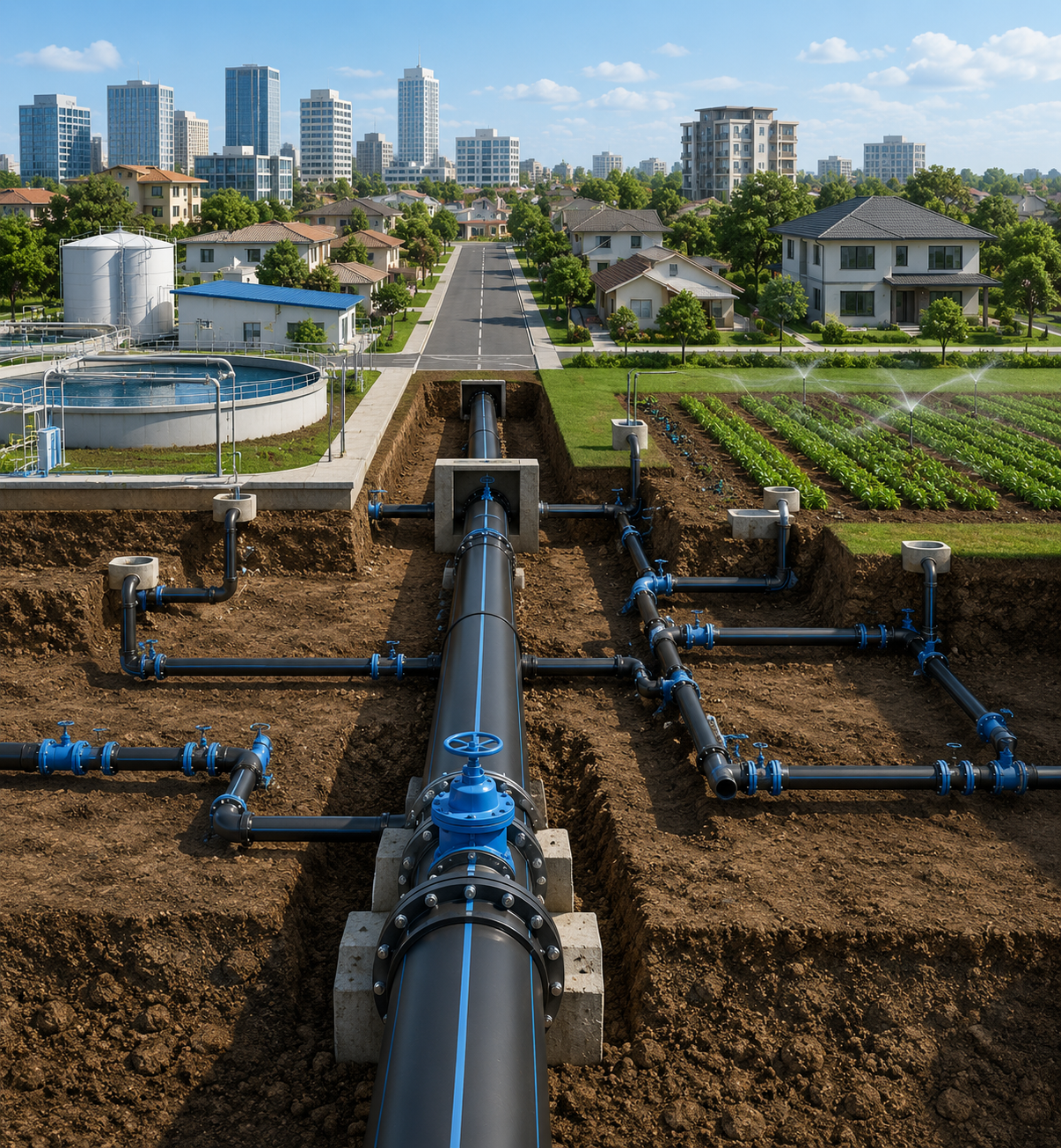
A Pipe Distribution Network (PDN), often referred to as a PDN system in the industry, is the backbone of any modern water supply system. Whether it’s an urban township, an industrial complex, or a rural irrigation layout, PDN systems ensure water or utility fluids are transported efficiently from the central source to end users. In simpler terms, PDN pipes form the connected network that carries water from treatment facilities or reservoirs to homes, buildings, and agricultural zones.
What makes PDN systems essential is not just their ability to transport water, but also their ability to maintain flow, pressure, and reliability over long distances. In growing cities and expanding infrastructure projects, PDN systems play a crucial role in reducing water loss, preventing leakages, and managing distribution with precision.
How PDN Systems Work
A well-designed PDN includes several key components:
Primary transmission lines
that move bulk water from the source
Secondary distribution lines
that feed into blocks and communities
Service connections
that supply individual homes, farms, or facilities
Accessories
such as valves, joints, elbows, reducers, and tees for flow control
The network may run underground or above ground depending on the project area. What matters most is consistency, ensuring end users receive sufficient water pressure with minimal fluctuation.
High Quality
Excellence in Every Pipe
Why PDN Pipe Selection Matters
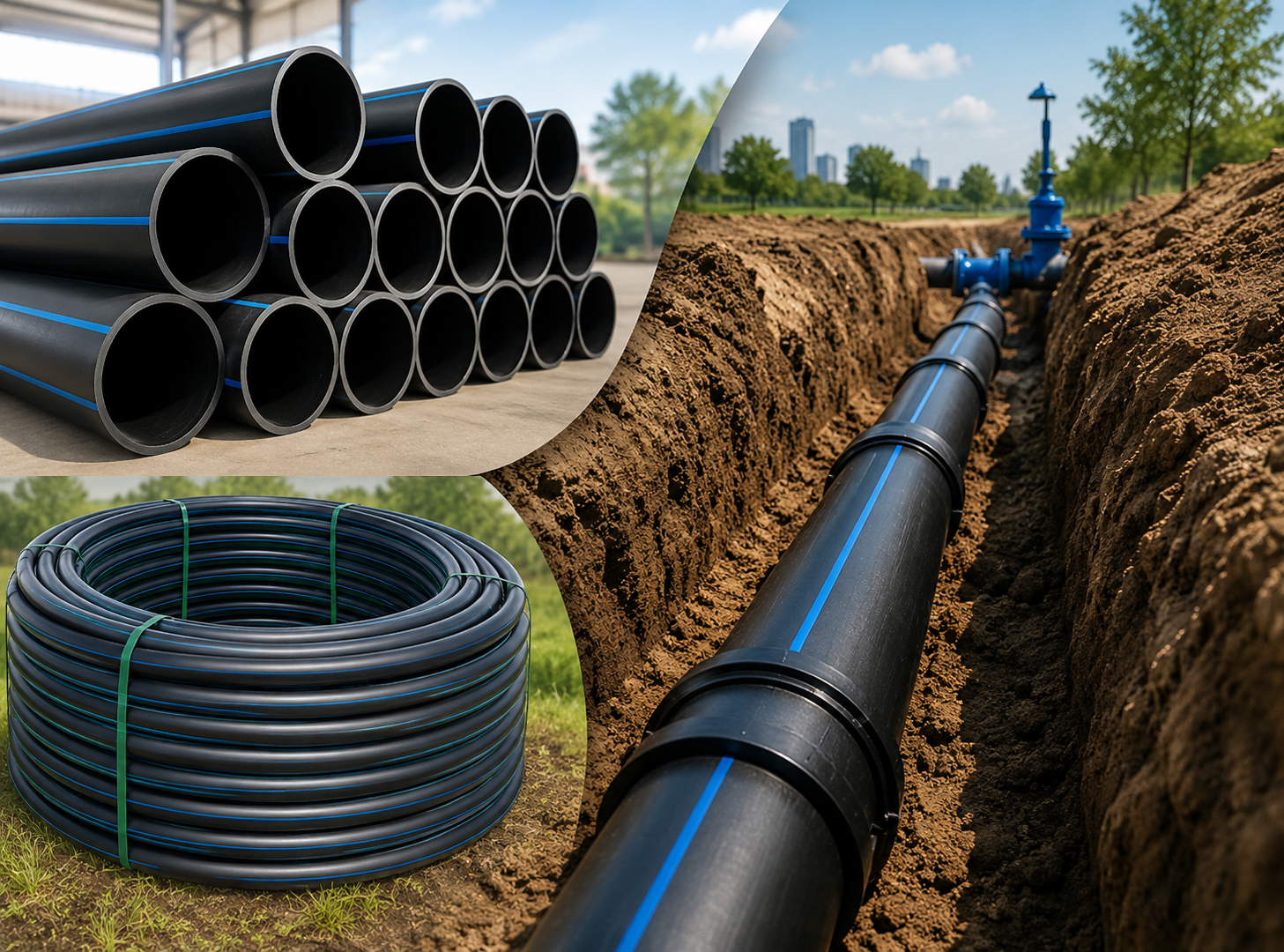
Not all pipes are equal. The efficiency of a Pipe Distribution Network largely depends on the material and quality of the PDN pipe used. Materials like HDPE (High-Density Polyethylene) and MDPE (Medium-Density Polyethylene) are widely preferred due to their strength, flexibility, and corrosion resistance.
HDPE pipes are used where high pressure, long service life, and structural durability are required. MDPE Pipes may be used in areas with lower pressure needs or where installation flexibility is beneficial. Both materials perform well in water distribution applications, but the selection depends on pressure class, ground conditions, design layout, and project requirements.
Benefits of a Well-Designed PDN
A strong Pipe Distribution Network offers advantages such as:
Reduced leakage and water loss
Lower maintenance and operational costs
Longer service life of the entire water system
Proper pressure balance across multiple outlets
Compatibility with modern trenching and fusion techniques
When designed and executed correctly, PDN systems support sustainable resource management and uninterrupted supply.
Applications of PDN Pipes
PDN systems are used across multiple sectors, including:
Versatility
Municipal water supply schemes
Residential and commercial developments
Agricultural irrigation projects
Industrial water distribution
Water treatment facility networks
Infrastructure utilities and town planning
Municipal water supply schemes
Residential and commercial developments
Agricultural irrigation projects
Industrial water distribution
Water treatment facility networks
Infrastructure utilities and town planning
Municipal water supply schemes
Residential and commercial developments
Agricultural irrigation projects
Industrial water distribution
Water treatment facility networks
Infrastructure utilities and town planning
Municipal water supply schemes
Residential and commercial developments
Agricultural irrigation projects
Industrial water distribution
Water treatment facility networks
Infrastructure utilities and town planning
Wherever reliable water distribution is required, PDN pipe systems become indispensable.
Conclusion
Investing in the right PDN piping system is not simply about buying material. It is about ensuring the reliability and efficiency of an entire supply network. As infrastructure continues to expand, Pipe Distribution Networks will remain essential to how cities, industries, and agricultural regions function. The better the PDN system, the smoother and more sustainable the water distribution becomes.